


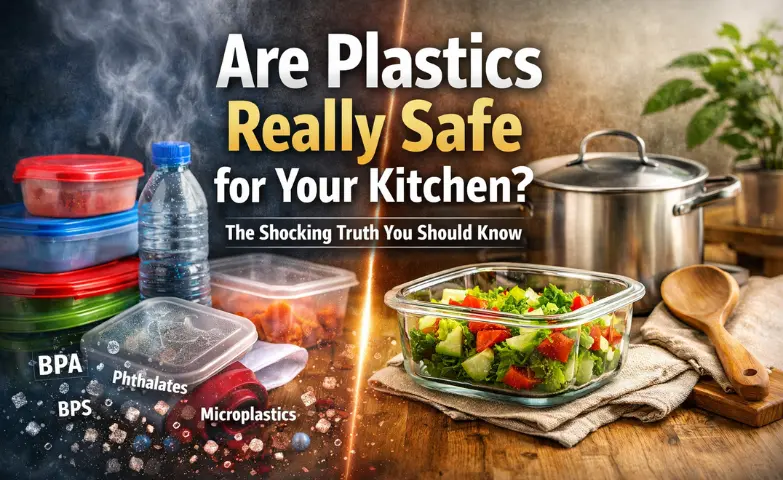
Are Plastics Truly Kitchen-friendly?
No doubt plastics are the backbone of modern kitchens. From storage containers to water bottles to cutting boards and microwave covers, plastic offers durability, affordability and convenience. But a growing wave of health warnings and scientific studies, and online searches about chemical exposure has generated uncertainty among people- ‘Are plastics in our kitchens truly safe?’.
These concerns are baseless. Recent studies highlight that certain plastics release harmful chemicals when they are exposed to heat, oil or acidic foods.
What’s Inside Kitchen Plastics?
Plastics vary in how they are made. Many contain chemical additives that enhance flexibility, durability, or heat resistance.
When subjected to heat, these chemicals can migrate into food. Which may have harmful effects on health.
Bisphenol A (BPA)
Also known as BPA is a well-known plastic chemical, commonly found in can linings, food storage containers and water bottles. Adverse health effects related to BPA are reproductive issues, hormonal disruption, increased risk of heart disease and possible links to obesity and diabetes. Many countries have restricted the use of BPA, especially in baby products.
Phthalates
They are often found in plastic wraps, soft containers and some food packaging. They are harmful as they are linked to developmental problems in children, fertility issues and interfere with hormone function.
Microplastics and Nanoplastics
Research reveals that when plastic containers are heated, they release tiny plastic particles into food and water. These micro-plastics enter the human bloodstream, accumulate in organs and may cause inflammation and cellular damage.
These researches have made people anxious and led them to look for safety measures online.
Heat and Plastic: A Dangerous Combination
Heat is one of the biggest triggers for chemical leaching. When hot liquid is poured into a plastic bottle or food is heated in plastic containers, chemical migration is increased.
Ever wondered what are the common mistakes we make in our everyday routine.
- Heating leftovers in plastic containers
- Using plastic spatulas on hot pans
- Washing plastics in very hot water
- Reusing single-use plastic bottles
These are some common risky neglected practices that result in chemical migration.
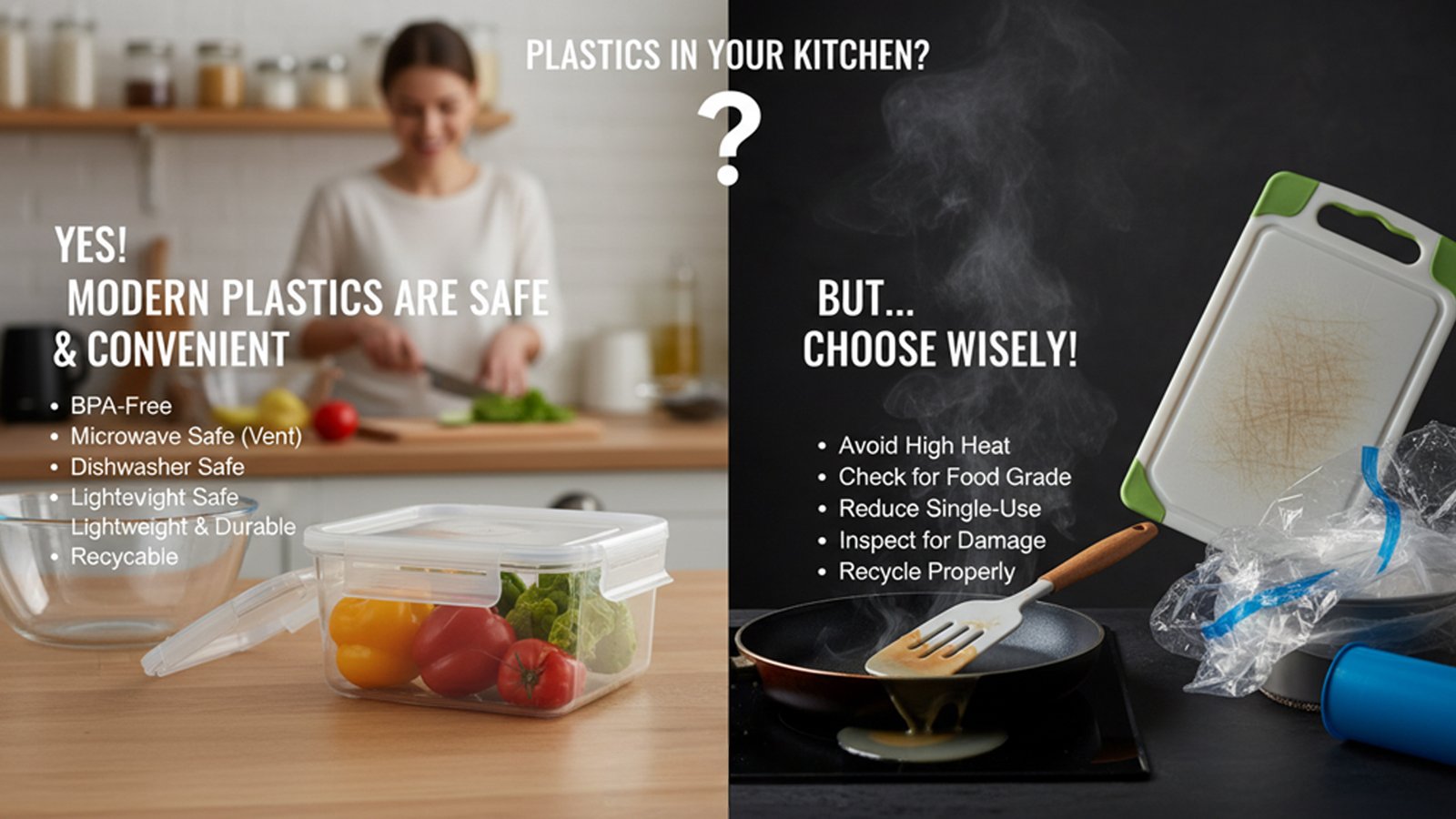
You might have noticed labels like “food-grade”, “microwave-safe”, or “BPA-free”. They offer some assurance, but they don’t promise complete safety. They contain other bisphenols like BPS or BPF, which have similar health risks.
A Healthier Kitchen: Safer Alternatives
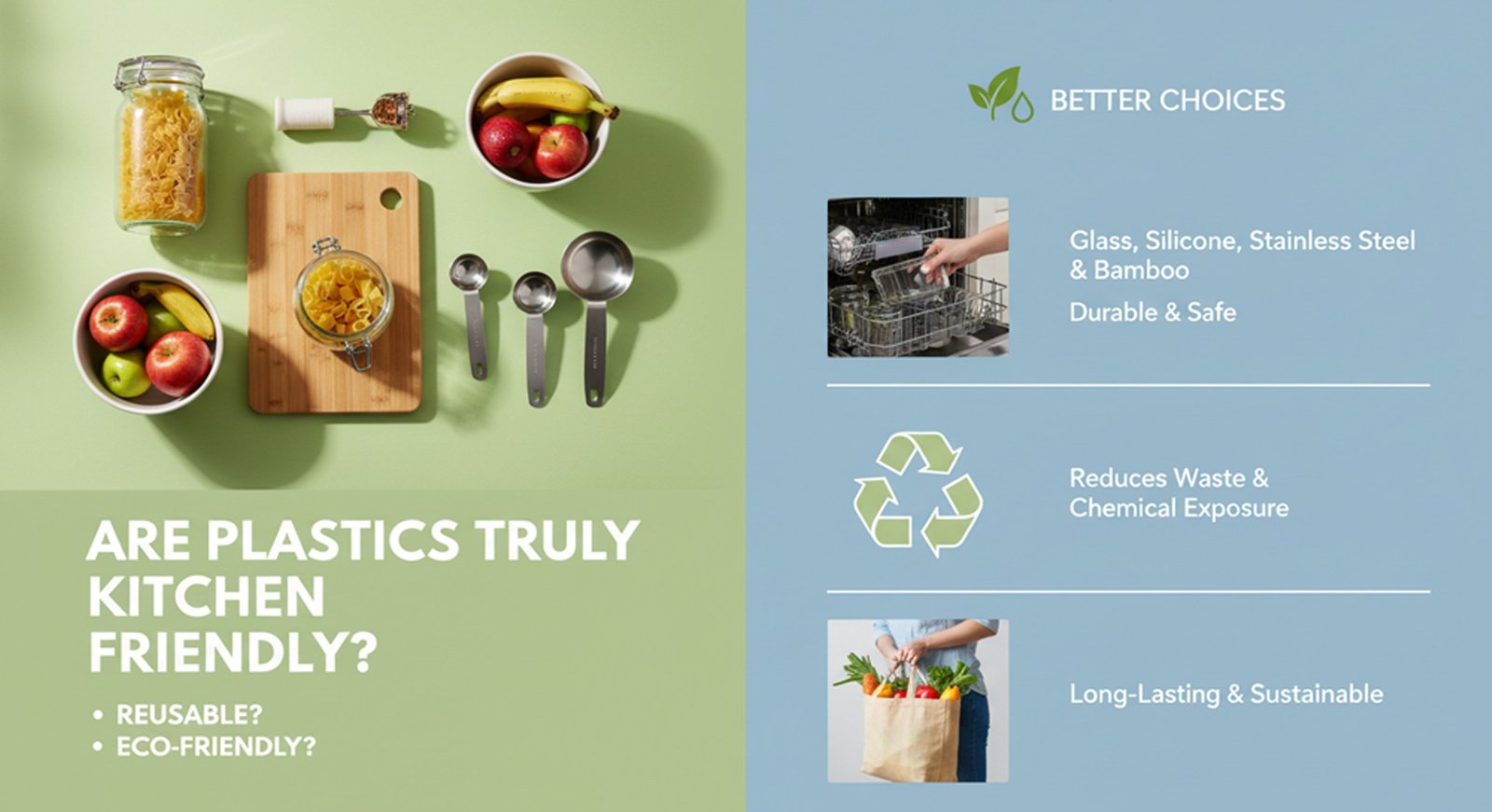
Small changes can significantly lower exposure. Use glass containers for storage, ceramic and clay plates for serving, stainless steel for cookware and wooden utensils instead of plastic.
These small steps eliminate risks, thereby leading to a healthier lifestyle. Cleanliness and healthy habits plays a crucial role in maintaining physical and mental well-being.
Safer the kitchen, happier the family.
At Recite You, we focus on uncovering everyday issues that quietly impact health, lifestyle, and well-being, often going unnoticed in routine living. The widespread use of plastics in kitchens is one such concern that demands informed discussion rather than panic or assumptions. Through credible research, expert-backed insights, and simplified explanations, our aim is to help readers understand how daily habits—such as food storage, cooking practices, and material choices—can influence long-term health outcomes.
In an age where convenience often takes priority, awareness becomes the most powerful tool for prevention. By highlighting scientific findings around chemical exposure, heat-induced leaching, and safer alternatives, Recite You encourages mindful decision-making without disrupting modern lifestyles. Small, conscious shifts—like choosing glass over plastic or avoiding heat exposure—can collectively create safer domestic environments.
As a platform committed to responsible journalism and public interest reporting, Recite You believes that health awareness begins at home. When readers are equipped with accurate information, they are better positioned to protect themselves and their families. A healthier kitchen is not just about what we cook, but also about what we cook in—and informed choices today shape a safer tomorrow.