Young, Tired, and Forgetful? Why “Memory Blur” is Affecting 20-somethings in 2026
“Why do I feel mentally foggy all the time?” Is one of the most talked-about questions in 2026.
Forgetting simple things, struggling to focus, rereading the same content repeatedly, or walking into a room and forgetting why are becoming common among young people and this is often described as memory blur.
What is Memory Blur?
A state of reduced mental clarity and recall, where information feels harder to retain, retrieve, or process is referred to as Memory blur. It is a collective experience shaped by modern lifestyles, digital habits, emotional pressures and not a medical diagnosis.
Feeling mentally “tired” even after rest, difficulty concentrating for long periods, struggling to absorb information deeply, losing track of time or priorities, forgetting names, tasks, or conversations are some ways it appears.
The Growing Digital Environment
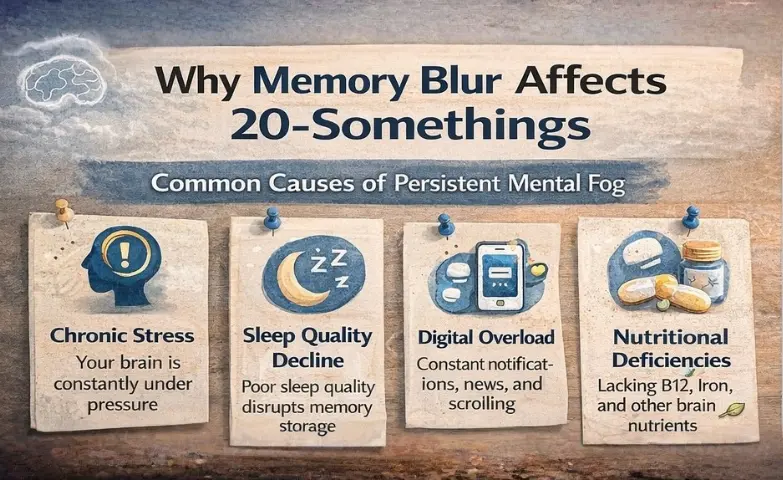
Digital overstimulation is one of the biggest contributors to memory blur in 2026. An enormous amount of information is consumed daily from short videos, notifications, messages, news updates, reels, and endless scrolling.
The brain is constantly switching attention, a process known as task switching. At that time it feels productive but it prevents deep focus. Sustained attention is required for memory formation, information stays at a surface level and never moves into long-term memory when attention is fragmented.
As the brain has adapted short form content, it expects instant stimulation. Which makes reading long articles, studying, or engaging in deep thinking feels exhausting. The brain has lost the habit of depth not its ability.
Chronic Stress
For many people in their 20s, stress is no longer an occasional response, it has become a permanent background state.
Sleep Quality Decline
Many people who are in their 20s technically get enough sleep, yet still wake up feeling tired. Because sleep quality has declined, not just sleep quantity.
If sleep cycles are disturbed, memories remain incomplete as memory isn’t stored when you learn something, it’s stored when you sleep.
Nutritional Gap
Physical factors are often overlooked. Many adults have deficiencies in nutrients which are essential for the brain, such as Vitamin B12, Iron, Magnesium.
Why This Isn’t A Permanent Damage
One of the most important things that people fail to understand is that memory blur in your 20s is usually reversible.
Our brain is highly adaptable and when we try to improve attention, reduce stress and regulate sleep it supports cognition and memory clarity often returns.
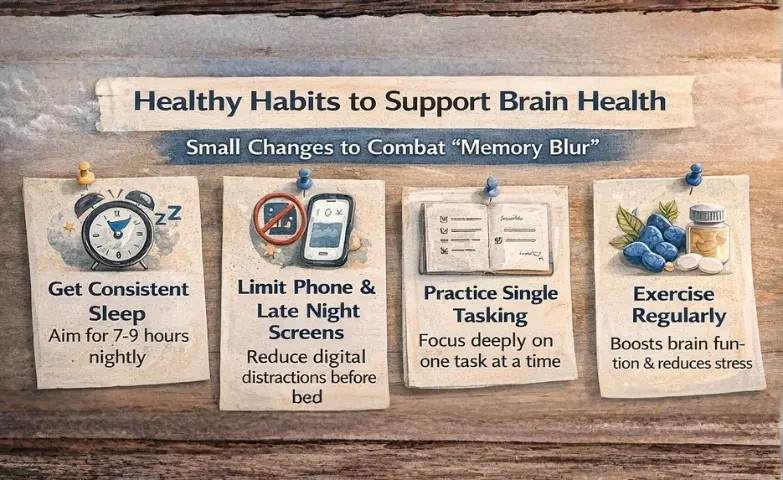
Some of the simple yet best ways that help retrain the brain to focus, store, and retrieve are as follows:
- Sleeping consistently
- Practising single focus activities
- Writing things down by hand
- Reducing multitasking
- Limiting late night screen exposure
- Exercising regularly
- Consuming information intentionally, not endlessly.
Recite You is a digital storytelling platform that brings real-life inspiration to the forefront. We share powerful stories of resilience, courage, and transformation—voices that deserve to be heard. Through words and visuals, we remind you that extraordinary strength often lives within ordinary people.