
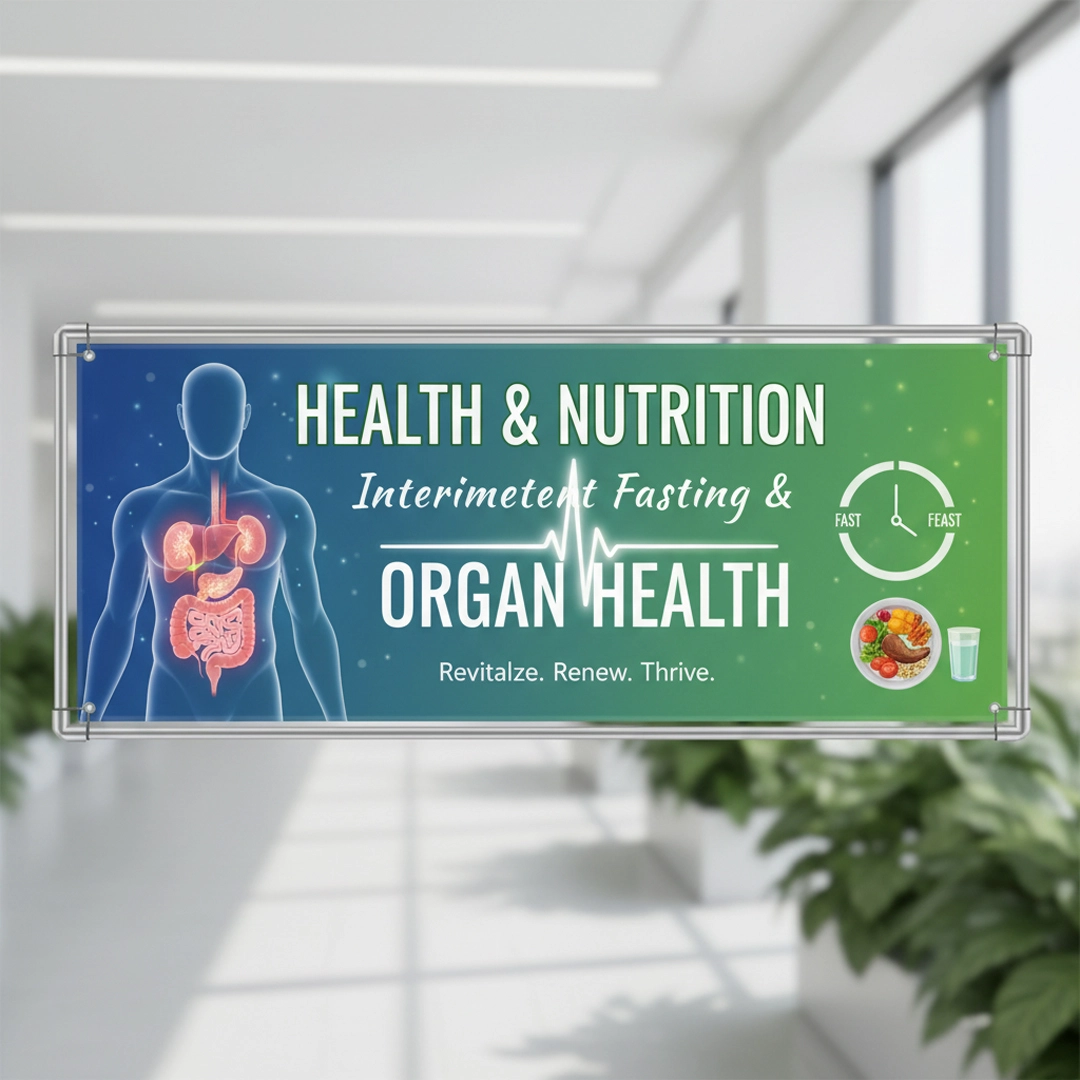
Intermittent Fasting: A Growing Health Trend
Have you ever come across the recent trend of Intermittent Fasting and wondered what it is?
Over the past few years, Intermittent Fasting has moved to a mainstream health trend. It is a wellness practice that offers pause. Allows the body to shift from constant digestion to repair and renewal. Consistent practice of Intermittent Fasting not only results in visible changes like fat loss or improved energy levels, it directly impacts the health of vital organs.
Common Intermittent Fasting Methods
Common Intermittent Fasting methods:
- The 16:8 method is one of the most popular approaches where you fast for 16 hours and consume all your food within 8 hours.
- The 5:2 diet, includes eating normally for five days and restricting calories for two days
During the period of fast insulin levels drop, fat stores are used for energy, and cellular repair processes are activated which benefits multiple organs simultaneously.
Science Behind Fasting and Organ Repair
Science behind Fasting and Organ repair
Our body remains in a “fed state” which prioritizes digestion and storage when we eat continuously.
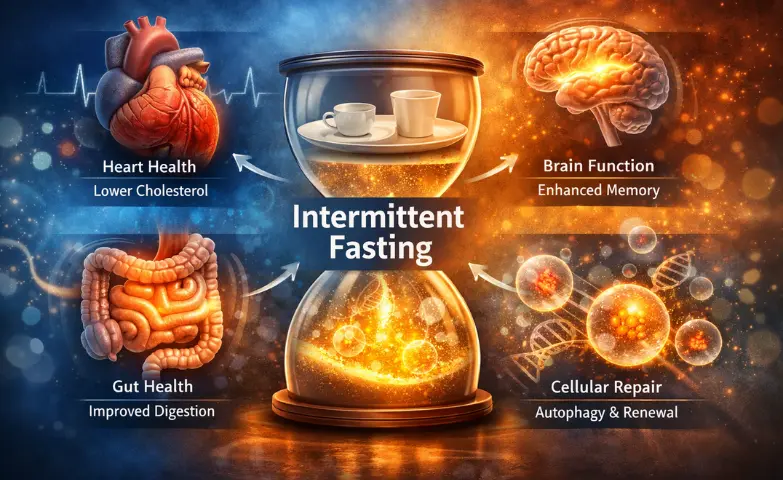
Fasting shifts the body into a repair mode which triggers a process called autophagy (It is a natural mechanism where damaged cells are cleaned out and recycled).
Reasons Why Autophagy Is Crucial for Organ Health
Reasons why Autophagy is crucial for Organ Health:
- It reduces inflammation
- Cellular efficiency is improved
- Slows down age-related organ decline
- Helps remove damaged proteins and cells
Impact on Heart Health
The hardest working organ of the human body is Heart, which beats approximately 100,000 times each day, pumping blood through 60,000 miles of blood vessels.
Research reveals that Intermittent fasting can improve several key cardiovascular risk factors.
It helps regulate blood pressure, decreases systemic inflammation, reduces triglyceride levels and lowers bad cholesterol (LDL).
Impact on Brain Health and Cognitive Function
Among humans the brain is the most energy demanding organ, and fasting enhances its performance and resilience.
It improves memory and focus, enhances neuroplasticity and increases brain-derived neurotrophic factor (BDNF). The brain switches from glucose to ketones as fuel when you’re in a state of fasting. Ketones help protect neurons from damage.
Impact on Gut Health and Digestive System
The human digestive system is not designed for non stop digestion. Intermittent Fasting allows the gut to rest and repair.
It strengthens the intestinal lining, reduces bloating and acid reflux, enhances nutrient absorption and improves gut microbiome diversity.
Who Should Be Careful With Intermittent Fasting?
Who should be careful with Intermittent Fasting?
Though Intermittent Fasting has multiple benefits, it is not suitable for everyone.
You’re not ideal for intermittent fasting if you’re an individual with severe diabetes or kidney disease, eating disorders or on specific medications requiring food timing. Pregnant women and breastfeeding mothers should also avoid intermittent fasting.
Research says that before adopting any fasting routine, seeking medical advice and listening to your body is essential.
At ReciteYou, we focus on simplifying complex wellness concepts so you can make informed lifestyle choices with clarity and confidence. Understanding practices like intermittent fasting goes beyond trends and requires awareness of how the body responds to rest, repair, and renewal. By exploring the science behind fasting and organ health, ReciteYou aims to help you build sustainable habits that align with long-term well-being rather than short-lived health fads.
Conclusion
Intermittent fasting is a biological reset and not just a fast growing trend. When an individual allows the body to take intentional breaks from constant digestion, powerful repair mechanisms are activated that benefit nearly every organ system, supporting metabolic balance, cellular longevity, hormonal regulation, and overall long-term wellness naturally.