

The Reality of Entrepreneurship
Young generation describes Entrepreneurship as a journey of freedom, innovation and success. Social media celebrates overnight wins, funding announcements, and flashy exits.
However, these also involve silent struggles, expensive mistakes, and hard-earned lessons.
Entrepreneurship isn’t just about building business, it’s more about unlearning myths, management and evolving as a person.
Many lessons can’t be learned from books or podcasts, they come from exhaustion, repeated trials, rejections, missed opportunities and sometimes regret.
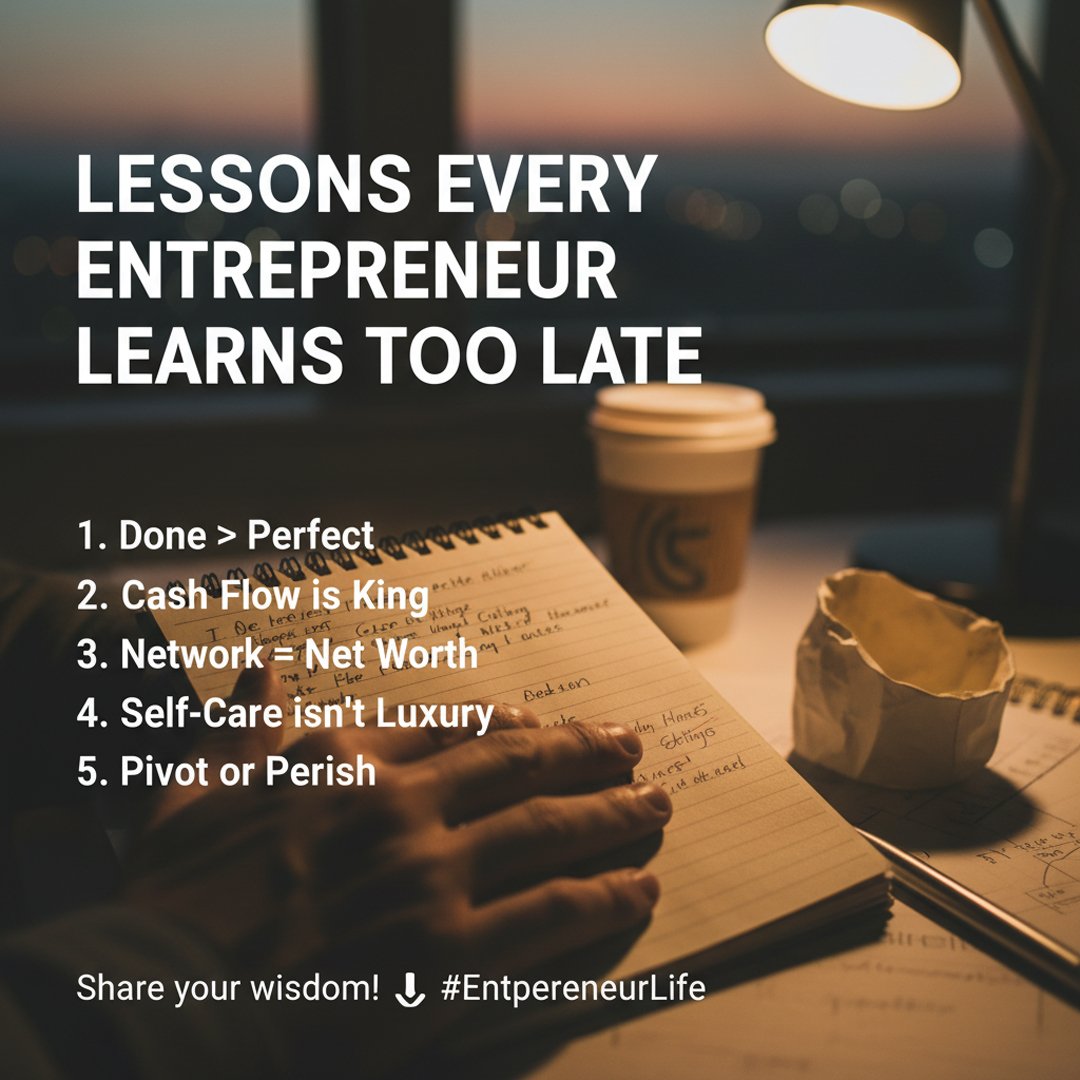
Listing below some important lessons that almost every Entrepreneur learns too late:
Execution builds Businesses, not Ideas
There is a widespread misconception among entrepreneurs that unique ideas are their biggest asset.
They spend months, protecting it, polishing it, and perfecting it.
As a result, they fail to consider the fact that ‘the market doesn’t reward ideas, it rewards execution’.
There are thousands of similar ideas launched every year.
Originality alone is not the reason behind success.
Consistency, speed, and adaptability are the key factors that separates successful businesses from failed ones.
Passion is Important, but Profit is essential
We are familiar with the saying ‘Do what you love and money will follow’.
Many people don’t understand pricing, margins, or cash flow, they just pour their heart into a startup.
They believe growth alone is enough and make decisions to undercharge, overspend, or delay monetization.
Eventually, reality hit them that passion alone cannot pay salaries, rent, or suppliers.
Successful entrepreneurs learn to balance purpose with profitability.
They strongly believe ‘A business that doesn’t make money is not a passion project, it’s a liability.’
Perfection is the reason for slower growth
Many founders delay launching because their product isn’t “ready”.
Perfection often becomes an excuse for fear.
New Entrepreneurs fail to recognise that feedback from real users is more valuable than endless internal planning.
Customer feedback is the key factor that helps you grow.
Doing Everything Yourself Is a Growth Killer
In the beginning, entrepreneurs wear multiple hats and try to manage sales, marketing, finance, operations.
They believe that nobody can do the job as well as them.
In the long run, it leads to exhaustion and stalled progress.
Business scale through systems and people and not with individual effort.
Over time, Entrepreneurs learn that delegation is not losing control, it’s gaining clarity and focus.
Hiring Late Costs More than Hiring Early
Entrepreneurs with new startups try to “manage a little longer” on their own.
What they don’t realise is that the cost of delayed hiring is often higher which results in missed opportunities, slower growth, and burnout.
On the other hand, hiring the wrong people because of rush, can be equally damaging.
Some entrepreneurs learn too late that skills matter, but apart from it attitude, culture fit, and values matter as well.
A business with the right team helps grow and shape a bright future.
Cash Flow Problems Kill Businesses
Ever wonder why businesses fail?
Not because their idea was bad but because they ran out of money.
Entrepreneurs often focus on revenue while ignoring cash flow.
Delayed payments, high fixed costs, and poor financial planning slowly chokes business growth.
Successful Entrepreneurs say that understanding finances early is a lesson learned after painful experiences.
- Tracking expenses
- Building reserves
- Planning for lean periods
are some basic steps one should follow to avoid Cash flow.
Not Every Customer Is Worth Keeping
During initial days every order feels necessary, every customer feels valuable.
Eventually, owners realise that some customers cost more than they bring.
Learning to identify the ideal customer and letting go of the wrong ones like Late-paying clients, constant complainers, is a lesson often learned after burnout.
Serving customers who respect the business, align with its values, and are willing to pay for value leads to sustainable growth.
Marketing is Crucial
Many Entrepreneurs see marketing as optional, they believe if the product is good, it will sell itself.
However, the ground reality is harsher.
Without marketing even great products remain invisible in today’s market.
Entrepreneurs invest heavily on product development and neglects branding, storytelling and customer acquisition which transforms a business into a recognised brand.
They learn too late that marketing is communication, not manipulation.
If customers don’t know you exist, they won’t choose you.
Failure Leads to Success
When a business is closely tied to identity, failure feels personal.
New Entrepreneurs often interpret failure as proof that they’re not good enough.
They fail to realise that failure is not the opposite of success, it’s a step towards it.
Every rejected project, failed launch and bad hire carries valuable lessons.
The mantra to success is Fail, learn and adapt.
No success comes without failure or struggles.
Hustle and Rest are Equally Important
Today’s work culture glorifies long hours and constant grind.
Surely, in the beginning, it is essential but when sustained over time, it leads to exhaustion, poor decisions, and declining creativity.
Physical and mental health are ignored by many Young Entrepreneurs, until it starts affecting their business, family relations and friendships.
Sleep deprivation, stress, and isolation leads you nowhere.
Recognised Entrepreneurs often suggest building habits that support long-term energy and focus as true success is not built by burning out.
The Journey Takes Longer than Expected
A successful business is not grown overnight, it demands years.
Mismatch between expectations and realities often leads to frustration and self-doubt.
Consistent team effort leads to success which also demands patience, flexibility, and resilience.
Businesses that are thriving today, took years to establish their identity and stability.
“Growth comes to those who stay committed.”
Entrepreneurship isn’t a straight path, it’s messy, uncertain and personal.
It requires vision, hard work, and the willingness to grow with others.