In India the meaning of art has never been just decoration, it has always been a blend of philosophy, emotion, ritual and a form of meditation. From intricate patterns made on mud floors of rural homes to painted walls of ancient monuments, Indians have used artistic expression to communicate stories, celebrate culture and express emotions.
Holistic wellness is what today’s world seeks for. Rooted to centuries old traditions, Indian art therapy is gaining recognition as a powerful healing practice.
India’s diverse folk arts like Warli, Gond, Madhubani, Mandala, Kalamkari and more consist of therapeutic qualities that can calm the mind, help individuals reconnect with themselves and regular emotions.
What Is Art Therapy?
You might be wondering what art therapy means. It is a form of psychotherapy that uses creative processes like painting, drawing, sculpting, or designing to help individuals express emotions and manage psychological stress is what art therapy means. It helps people to communicate feelings that may be too difficult to put into words. Better concentration, mindfulness, enhanced self-esteem, improved emotional regulation, release of repressed memories, relief from trauma, reduction of stress and anxiety are some of several therapeutic benefits psychologists highlight.
The uniqueness of Indian folk arts lies in its deeply symbolic, community driven, often connected to nature attributes. Each form carries its own kind of healing energy and emotional release.
The therapeutic benefits are remarkable:
- Improved concentration and mindfulness
- Enhanced self-esteem and confidence
- Better emotional regulation
- Release of repressed memories
- Relief from trauma and PTSD
- Significant reduction in stress and anxiety
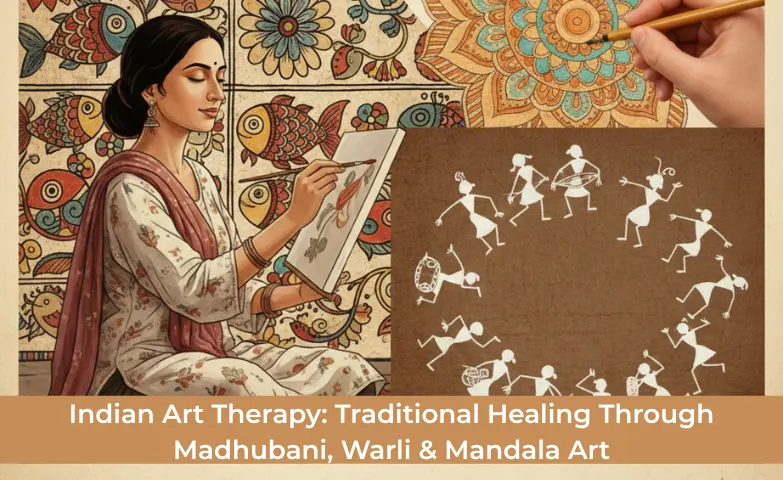
Madhubani Art:
Originated from Mithila region of Bihar. Its craft material requires natural dyes, bright colors, brushes and twigs. Its uniqueness lies in its vibrant colors, bold outlines and detailed patterns. Traditionally created by women on household walls, it serves as a means of storytelling and emotional expression.
Healing Benefits
Mindful Focus:
The intricate linework and repetitive motifs engage the mind completely, reducing intrusive thoughts and anxiety. Each stroke demands presence.
Cultural Identity:
Madhubani art connects people to their roots, creating a profound sense of stability and belonging—especially important in our rapidly changing world.
Color Therapy:
The bold, contrasting colors elevate mood and stimulate positivity. The vibrant palette itself becomes medicine for the soul.
Women in rural India have long used Madhubani paintings to cope with hardship and express inner resilience. Today, therapists are using this art form for trauma healing, particularly among adolescents struggling with self-expression.
Warli Art:
Originated from Maharashtra, its craft material requires geometric figures and white pigment. Basic shapes like circles, triangles and squares are used in warli paintings. This trait of simplicity makes Warli art so therapeutic.
Healing Benefits
Mental Decluttering:
The minimalist approach promotes clarity and reduces cognitive overload. Less really is more for an anxious mind.
Grounding Practice:
Themes of nature and everyday village life—farming, dancing, gathering—remind us of life’s essential simplicity and our connectedness to earth and community.
Rhythmic Calm:
The repeating patterns create visual rhythm that mirrors meditation, gently guiding the mind toward stillness.
Social Emotional Processing:
Community scenes in Warli art help people explore complex feelings of loneliness, belonging, and togetherness without judgment.
Warli art serves as a quiet grounding practice, particularly helpful for individuals dealing with overstimulation, anxiety, and the constant digital noise of modern life.
Mandala Art:
In Sanskrit, mandala means ‘circle’, its form itself is symbolic of the universe, the wholeness, the self. Well, globally it is already a popular therapeutic tool, but their roots lie deep in Indian Spirituality.
Healing Benefits
Deep Meditation:
Creating mandalas regularly activates the brain’s relaxation response, similar to meditation practices. The act itself becomes prayer.
Emotional Balance:
Mandalas stimulate both the creative right brain and the analytical left brain, promoting inner harmony and integration.
Enhanced Focus:
The symmetry and repetitive structure help regulate attention and quiet racing thoughts, making mandalas particularly effective for ADHD and anxiety.
Trauma Recovery Support:
The circle represents safety and containment. This symbolic boundary helps individuals feel secure enough to express difficult emotions during the healing process.
Mandala drawing is now used as a healing ritual in therapy centers, wellness retreats, and meditation programs across India.
Holistic Healing Approach through Indian Art Therapy
In today’s generation there’s a renewed interest in Indian art therapy for several good reasons. One of the most important highlights is its holistic healing approach. Unlike purely modern therapeutic modalities, traditional Indian art connects the mind, body, and spirit. People feel emotionally safe with art forms as they are culturally relevant. Traditional artforms like Warli and Madhubani create a sense of togetherness, reducing loneliness and promoting community bonding. Art therapies help individuals to express feelings without needing to explain and justify them verbally.
If anyone wants to explore it, they don’t actually need a background in art, what is required is the willingness to explore. A simple way to begin is to draw basic mandalas in a notebook every night before sleeping. Can also draw Warli scenes by just using circles and triangles. Or can attend workshops organized by artists for authentic learning.
In an era when stress, anxiety, trauma, emotional exhaustion are rising, Indian art forms remind us that healing doesn’t always require words, sometimes moments of creation, colors, patterns, and stories can bring back one’s glow.
Across the country, people are rediscovering the potential traditional folk arts hold. Which were once meant to soothe, celebrate, and communicate deeper truths is now helping to calm individuals minds by beautifully bridging ancient wisdom and modern psychological practices.